
Can't Cut Through Superalloys? Achteck Tools Unveils 3 Breakthrough New Products at Changchun Stop, Targeting Aerospace Machining Pain Points Head-On
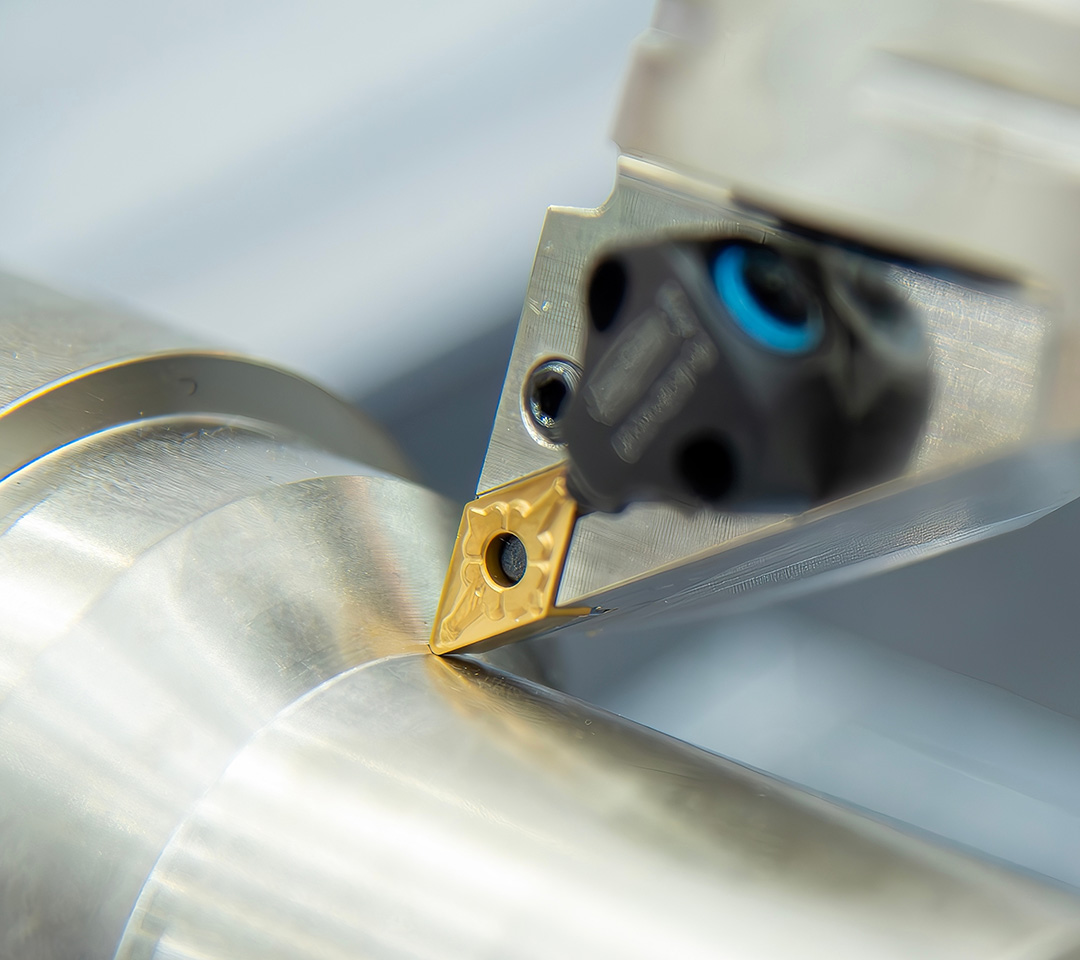
Superalloy edges chip the moment they hit the machine? Titanium alloy slotting sends chips flying while tool life plummets? These are the headaches engineers in Northeast China's aerospace and construction machinery plants grapple with daily — hard materials, poor thermal conductivity, concentrated cutting heat, leaving tools either cracked by thermal fatigue, stripped of coatings, or triggering chatter alarms.
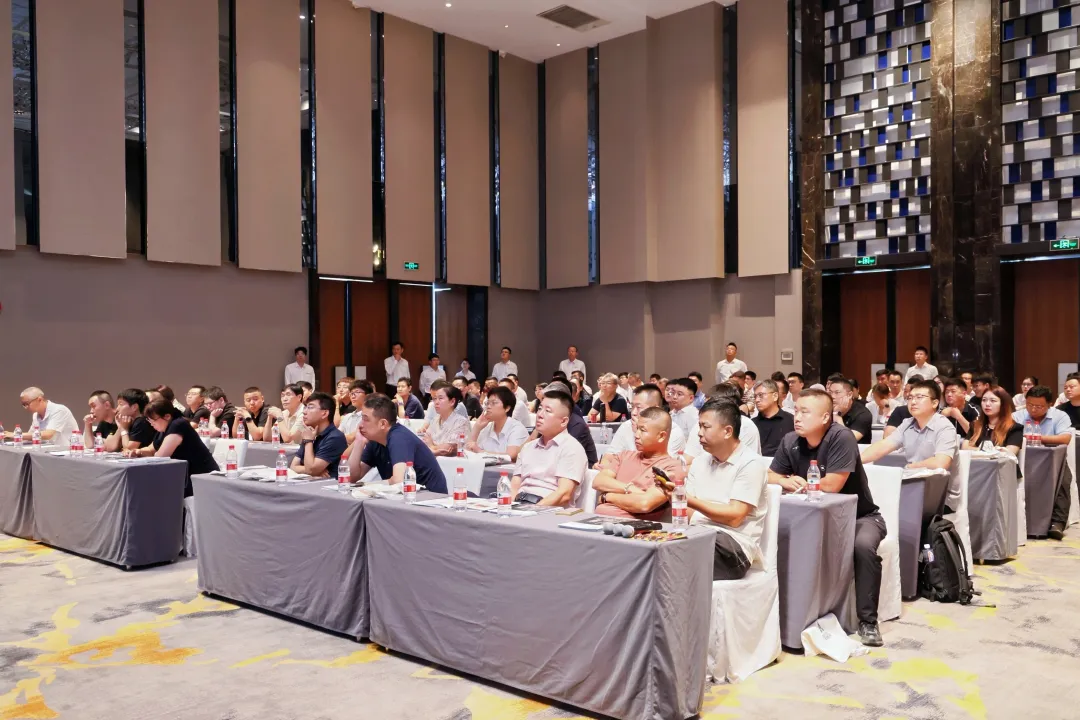
On August 11, Achteck Tools New Product Launch Tour landed in Changchun. Armed with three pain point-targeting new products, the event delivered a high-caliber technical feast for the aerospace and construction machinery sectors across Northeast China. Kede Numerical Control and Youji Technology were invited to attend, engaging in in-depth dialogue on cutting-edge machining trends and real-world application practices. The venue buzzed with lively discussion, and professional interaction flowed throughout the entire session.
Part 01 Three New Products Break Through: Quality and Efficiency Gains Start at the Pain Points
As an expert in machining difficult-to-cut materials, Achteck Tools empowers product development through deep process expertise. The product lineup unveiled at this event directly targets the core pain points in machining superalloys, titanium alloys, and similar materials — delivering targeted solutions for every stage of the machining process.
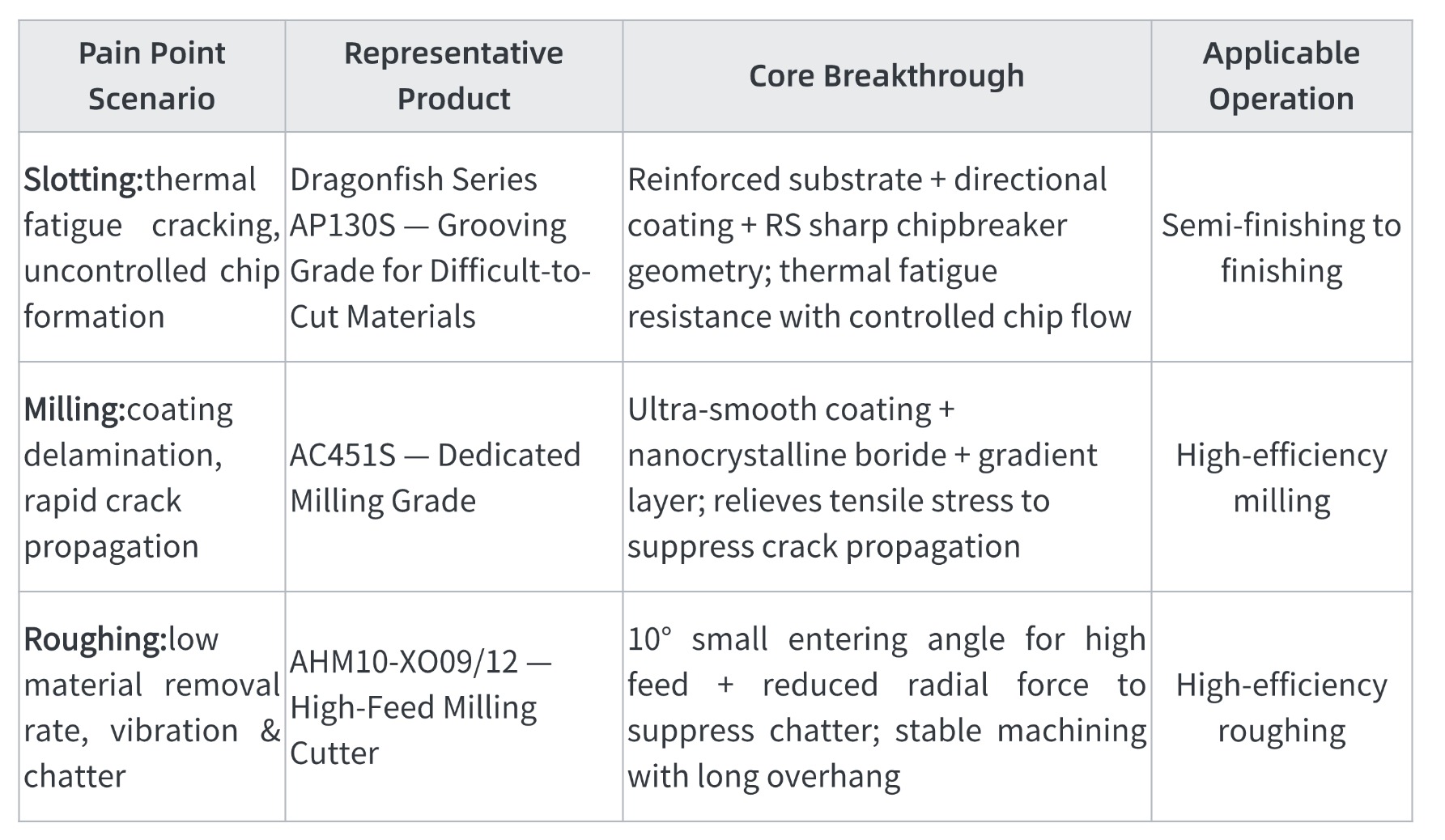
Get a quick overview of the three new products in the table below:
Pain Point 1: Slotting Superalloys & Titanium Alloys — Severe Thermal Fatigue, Rapid Wear, and Uncontrolled Chips
Superalloys and titanium alloys feature poor thermal conductivity and highly concentrated cutting heat. During slotting, tools are extremely prone to thermal fatigue cracking and delamination, leading to a dramatic drop in tool life. As the process moves into the semi-finishing to finishing stages, chip control becomes equally problematic — directly dragging down both surface quality and machining efficiency.
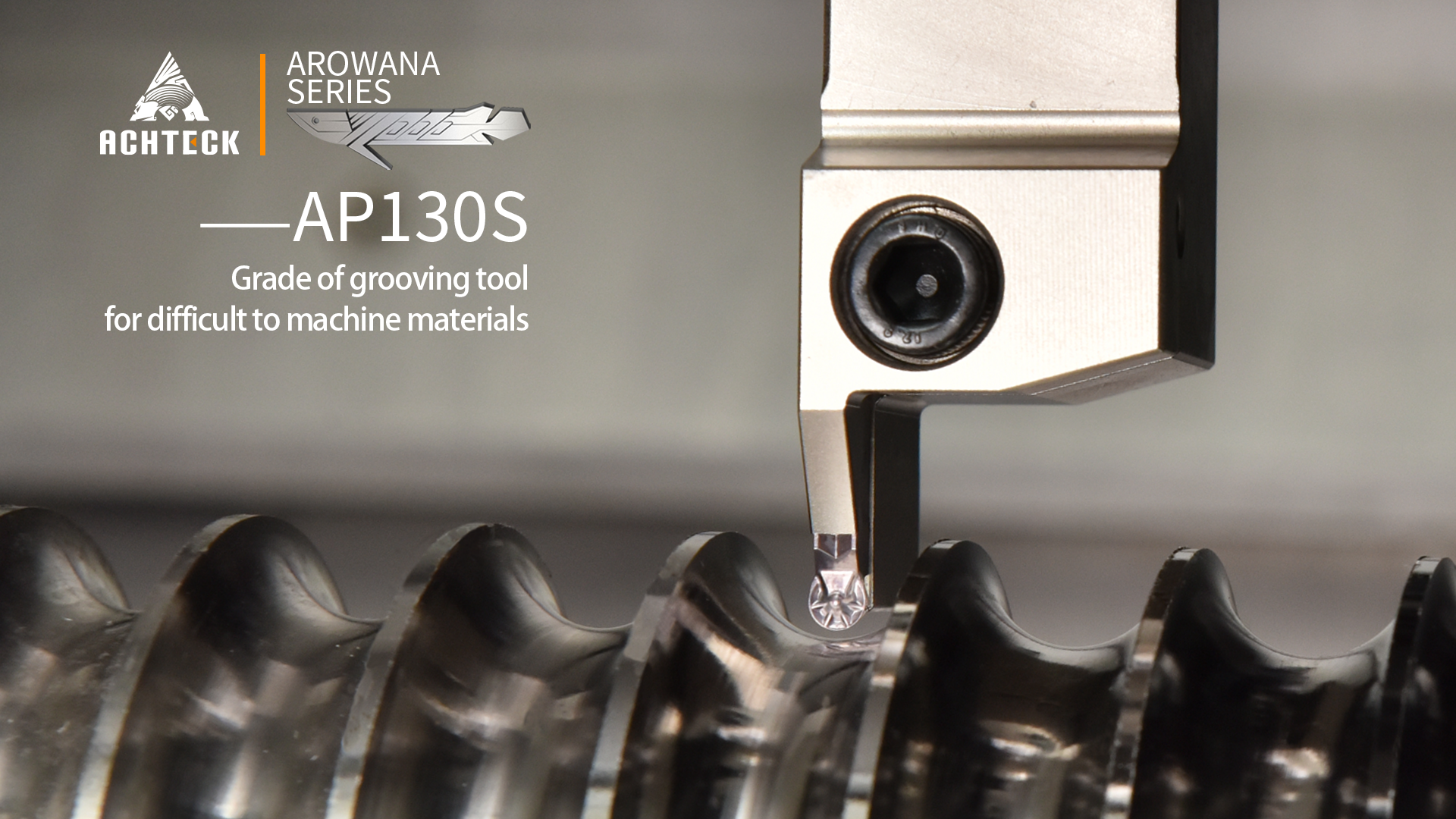
Solution — Dragonfish Series AP130S Grooving Grade for Difficult-to-Cut Materials:Through a substrate reinforcement process, the bonding strength between cobalt and tungsten carbide is enhanced, and carbide grain size and distribution ratio are optimized — significantly improving thermal fatigue resistance under high-temperature conditions. A coating system purpose-developed for difficult-to-cut materials is combined with proprietary coating toughening technology, delivering a substantial boost in coating-substrate adhesion and delamination resistance: a hard, wear-resistant outer layer paired with a tough, crack-resistant inner layer effectively blocks cutting heat conduction and slows tool wear. The chipbreaker portfolio spans a diverse matrix including CS/CM, TS/GS, and RM/RS, with the newly added RS geometry achieving low cutting forces via a sharp cutting edge, demonstrating exceptional chip control across the semi-finishing to finishing range. The synergistic empowerment across three technical dimensions — substrate, coating, and chipbreaker geometry — puts an end to frequent tool changes and rework in slotting difficult-to-cut materials.
Pain Point 2: Milling Superalloys & Titanium Alloys — Coating Delamination, Rapid Crack Propagation, and Poor Machining Stability
During high-speed milling of difficult-to-cut materials, the compounding of impact loads and tensile stress makes coatings highly prone to delamination and cracks to propagate rapidly — resulting in short tool life, dimensional instability, and persistently high scrap rates.
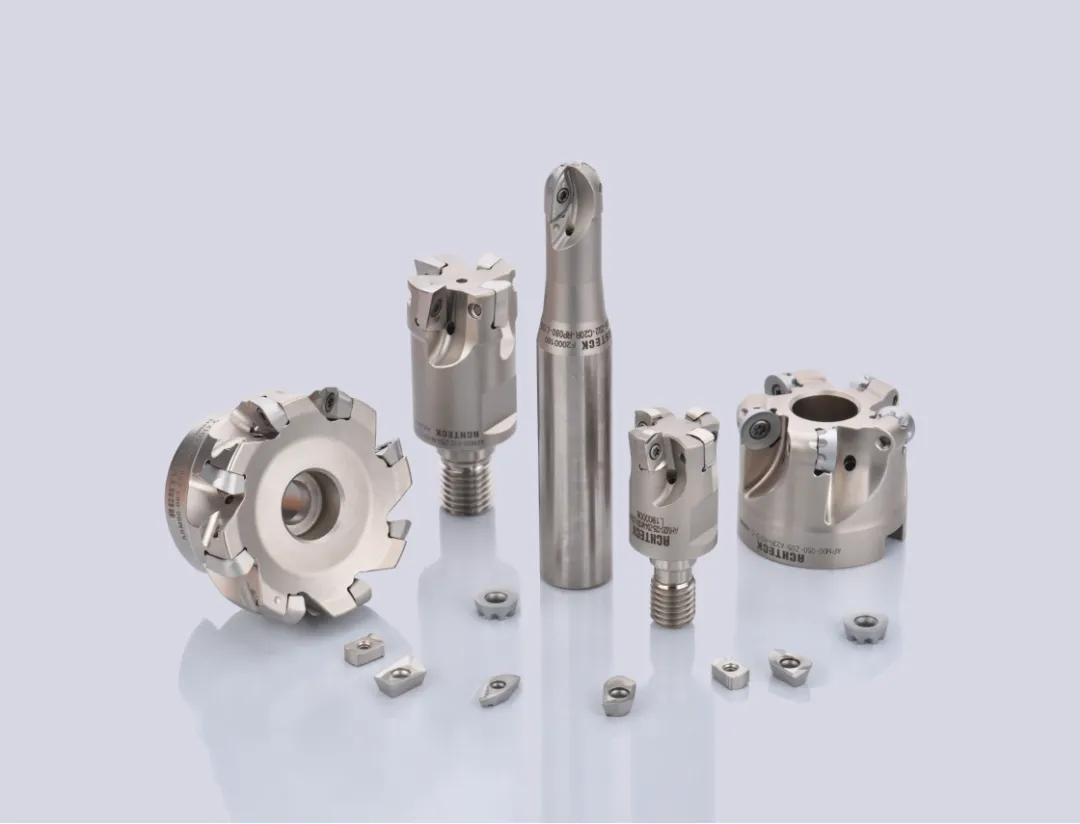
Solution — AC451S Dedicated Milling Grade:A special surface treatment process achieves an ultra-smooth coating surface, reducing cutting friction and adhesion. A nanocrystalline boride coating delivers extreme hardness and outstanding wear resistance. A gradient interlayer design effectively enhances coating-substrate bonding, and when paired with a tough substrate, combines both wear resistance and impact resistance. In practical machining, AC451S's all-new coating process effectively relieves tensile stress, dissipates impact loads generated during high-speed cutting, and significantly suppresses crack propagation and coating delamination — greatly extending tool life and improving machining stability, providing reliable assurance for high-efficiency milling of superalloys, titanium alloys, and steel components.
Pain Point 3: Roughing Difficult-to-Cut Materials — Low Removal Rate, Vibration & Chatter, and Hard-to-Manage Long-Overhang Conditions
Roughing difficult-to-cut materials often presents a dilemma: if the metal removal rate cannot be raised, machining cycles become protracted; push the cutting force too high and vibration and chatter ensue. This contradiction is especially acute in long-overhang, low-rigidity fixturing scenarios, where both surface quality and tool safety are under threat.
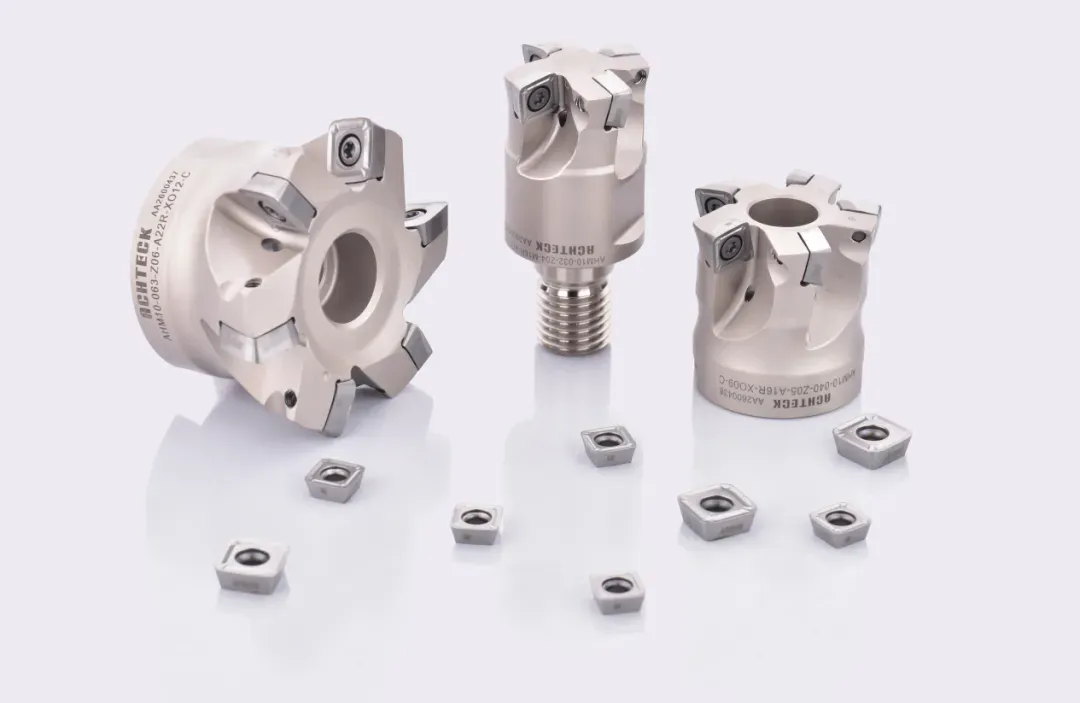
Solution — AHM10-XO09/12 Series High-Feed Milling Cutters:Centered on a 10° small entering angle, high feed rates are achieved even at shallow depths of cut, dramatically boosting metal removal rates and significantly shortening roughing cycles. At the same time, radial forces are greatly reduced, suppressing vibration and chatter at the source — enabling stable machining even in long-overhang, low-rigidity fixturing scenarios. The product offers three interface types to suit different machine tools, features full-line internal coolant design for precision cooling, a nickel-plated finish for aesthetics and corrosion resistance, and a unique cutting edge design for enhanced application adaptability — providing a reliable high-efficiency roughing solution for aerospace monolithic structural components and energy-sector superalloy parts.
Part 02 Soaring Aerospace · Building the Foundation:From Tool Sales to Delivery-Capability Focus
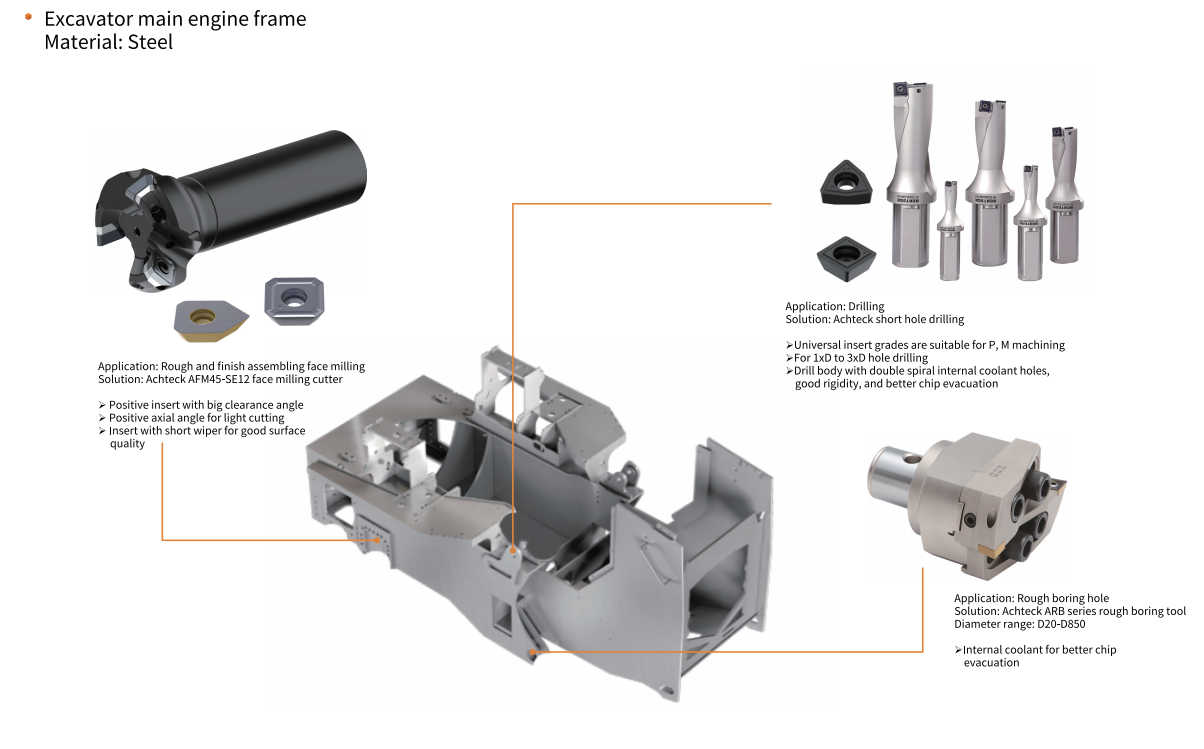
This promotional event focused on the aerospace and construction machinery sectors in Northeast China, breaking down common machining bottlenecks on-site and presenting 配套 solution pathways. Centered on customers' real-world challenges, Achteck Tools introduced three flexible cooperation models:
Turnkey Engineering — End-to-end delivery from equipment selection to trial-cut verification, driving efficient production line ramp-up.
Comprehensive Tool Management — Unified management of all tool categories, reducing costs and boosting efficiency with hassle-free operation.
Process Optimization & Upgrading — Targeted process improvements for continuous potential unlocking, ensuring stable production and efficiency gains.
The three models cover the full lifecycle from production launch to stable operation, flexibly adapting to diverse customer needs.
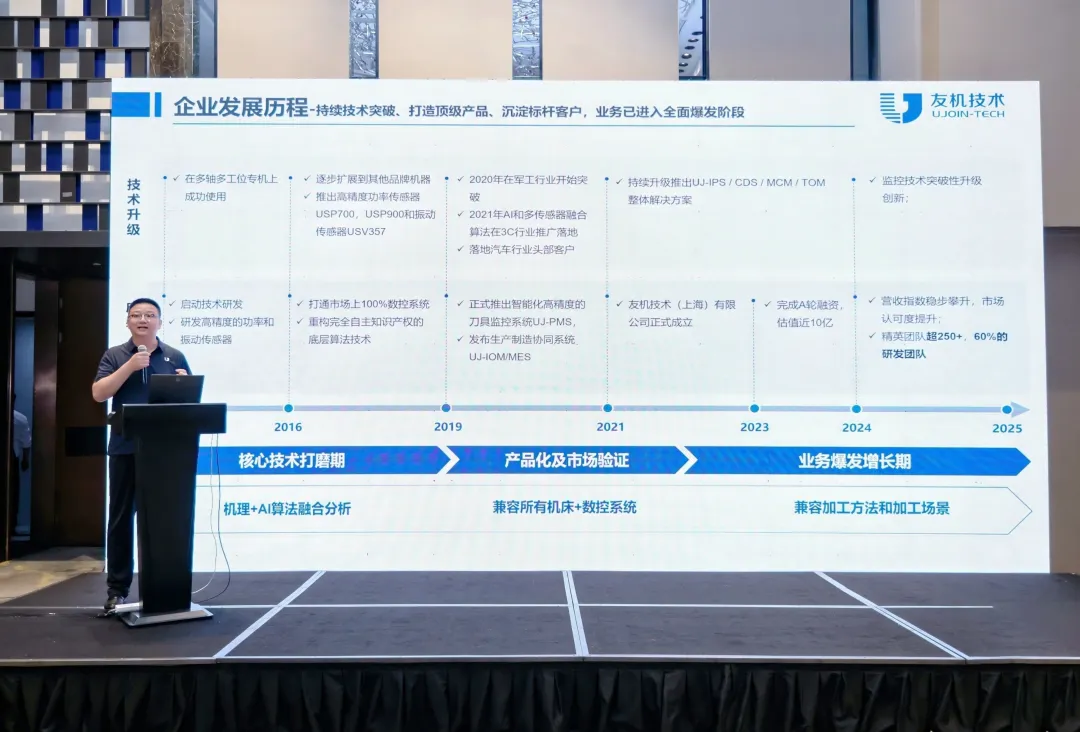
Youji Technology: Opening the Process Black Box with Intelligent Technology
Youji Technology specializes in process monitoring, adaptive machining, and collision protection, leveraging self-developed sensors and AI algorithms to open the process black box for precision manufacturing.
Its core product portfolio encompasses four systems: UJ-PMS Intelligent Machining Process Monitoring, UJ-IPS Adaptive Control and Protection, UJ-CDS Collision Protection, and UJ-MCM Equipment Health Predictive Maintenance — broadly compatible with various machine tool platforms.
Achteck Tools and Youji Technology jointly deliver a coordinated solution spanning tool selection to machining monitoring, providing dual oversight from the cutting source through the machining process — helping customers operate safely and effectively reduce production risks.
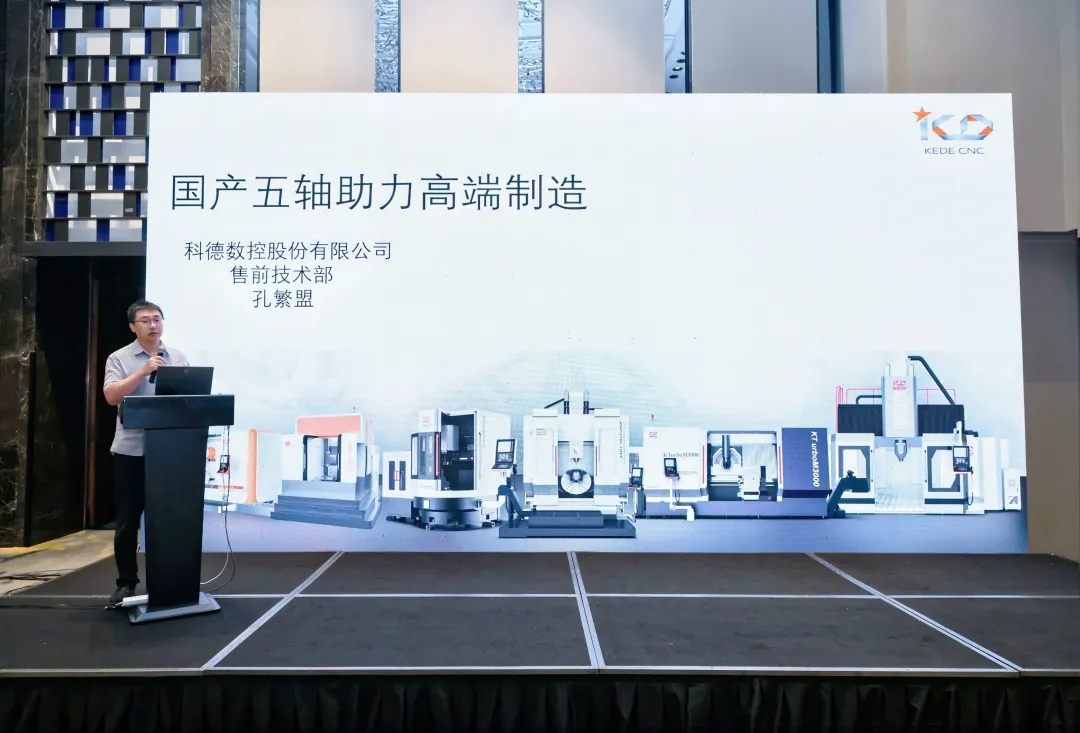
Kede Numerical Control: A Practitioner of Domestic Substitution for Five-Axis Equipment
Kede Numerical Control focuses on three core tracks: five-axis simultaneous machining, high-end CNC systems, and key functional components, accelerating the domestic substitution of high-end equipment through independently developed technology.
Its product line covers high-end machine models including the KMC Series five-axis vertical machining centers, KTX Series five-axis mill-turn centers, and GMA Series five-axis high-speed bridge-type gantry machining centers, as well as critical core components such as GNC62 Series CNC systems, servo drive units, torque motors, direct-drive swivel milling heads, and motorized spindles.
Addressing industry pain points such as the difficulty of precision control in five-axis machining and high system coordination requirements, Achteck Tools and Kede Numerical Control jointly provide customers with integrated, coordinated services from tooling solutions to five-axis equipment — empowering customers to achieve high-precision, high-efficiency machining goals.
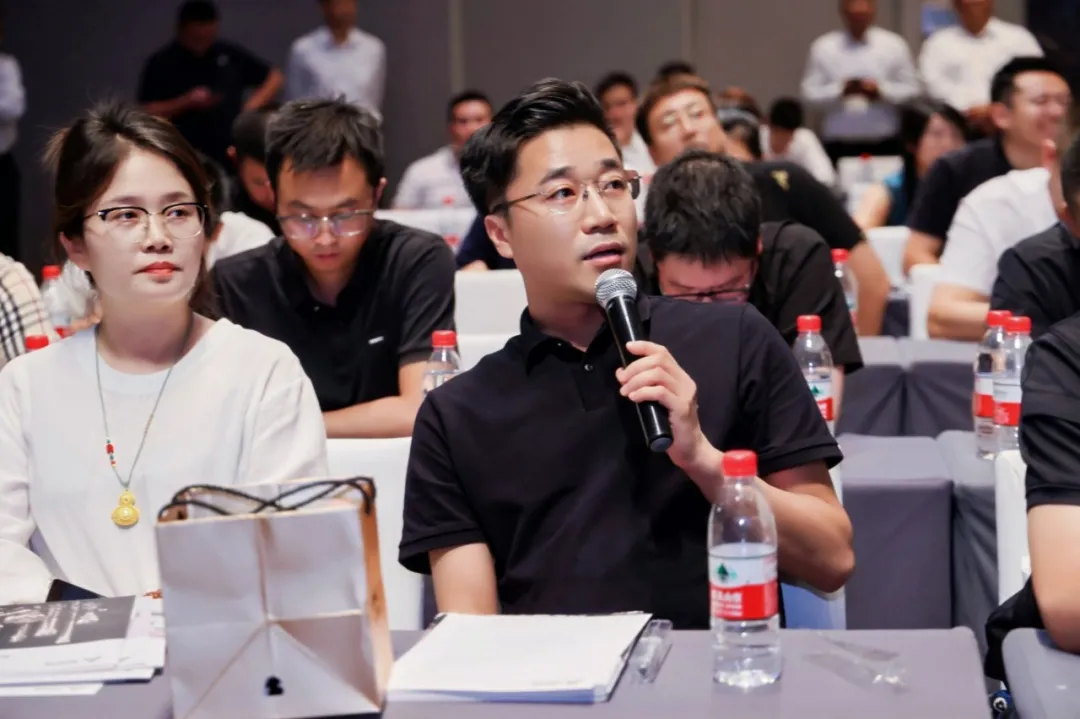
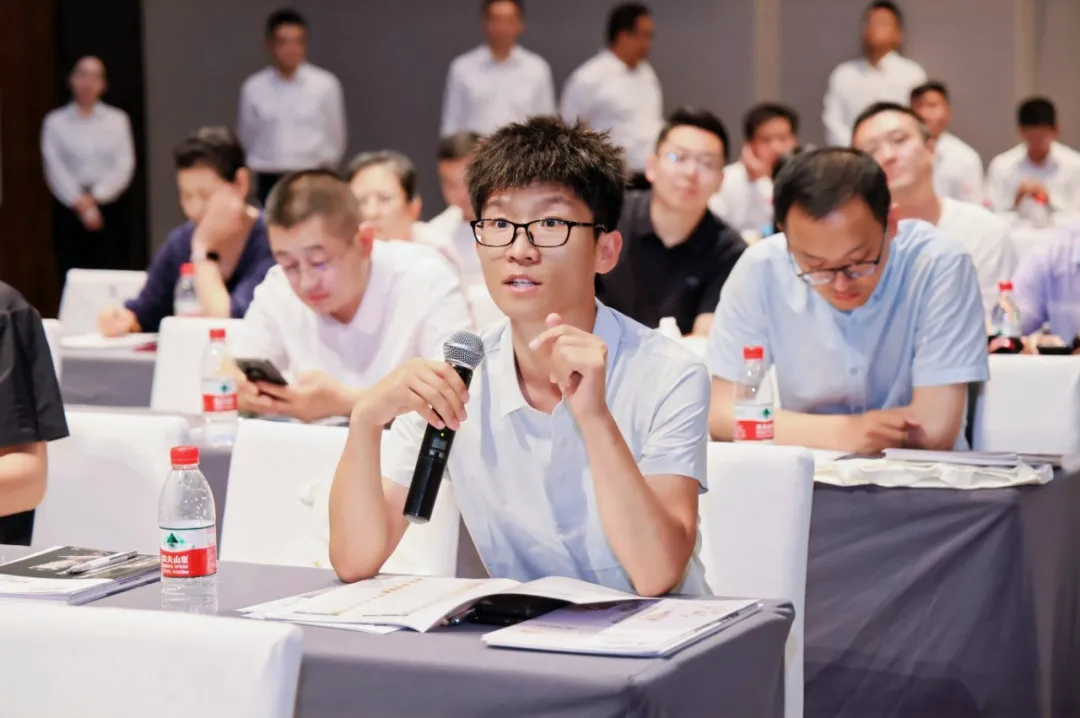

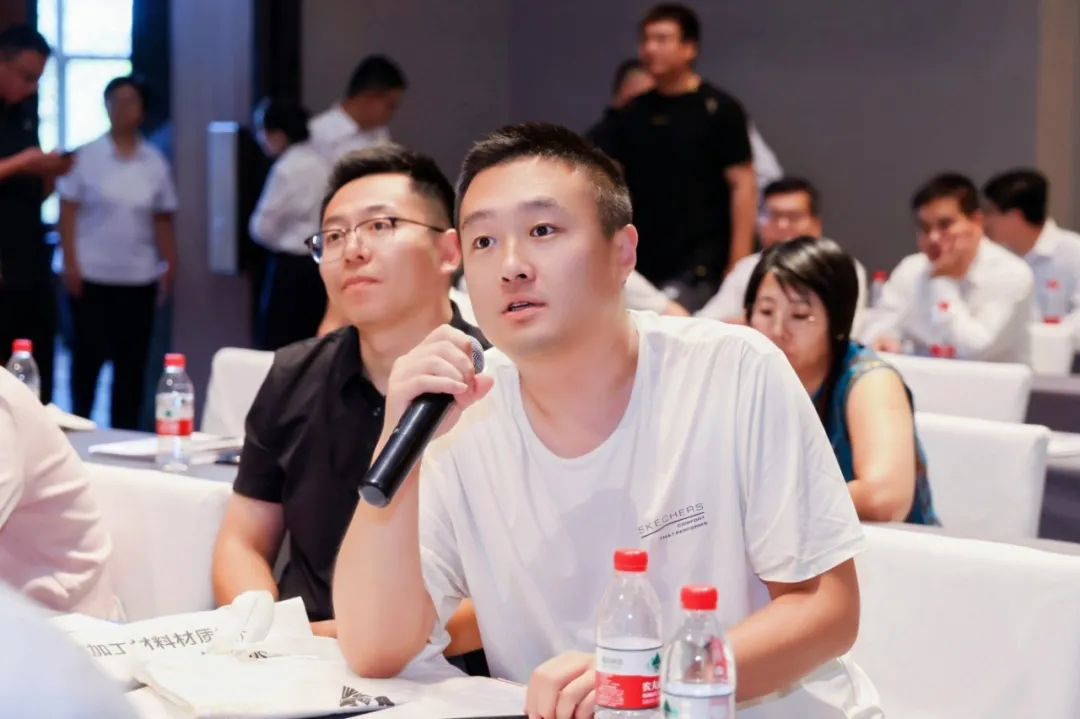
One-on-One Q&A: Precision Alignment with Customer Needs
During the interactive Q&A session, Achteck Tools' technical team provided one-on-one professional answers to practical customer concerns including tool life, machining efficiency, and production costs. Through face-to-face in-depth exchanges, customer core needs were precisely identified, earning technical trust through professional expertise and laying a solid foundation for deeper future collaboration.
Steadfast Dedication, Journeying Far Together
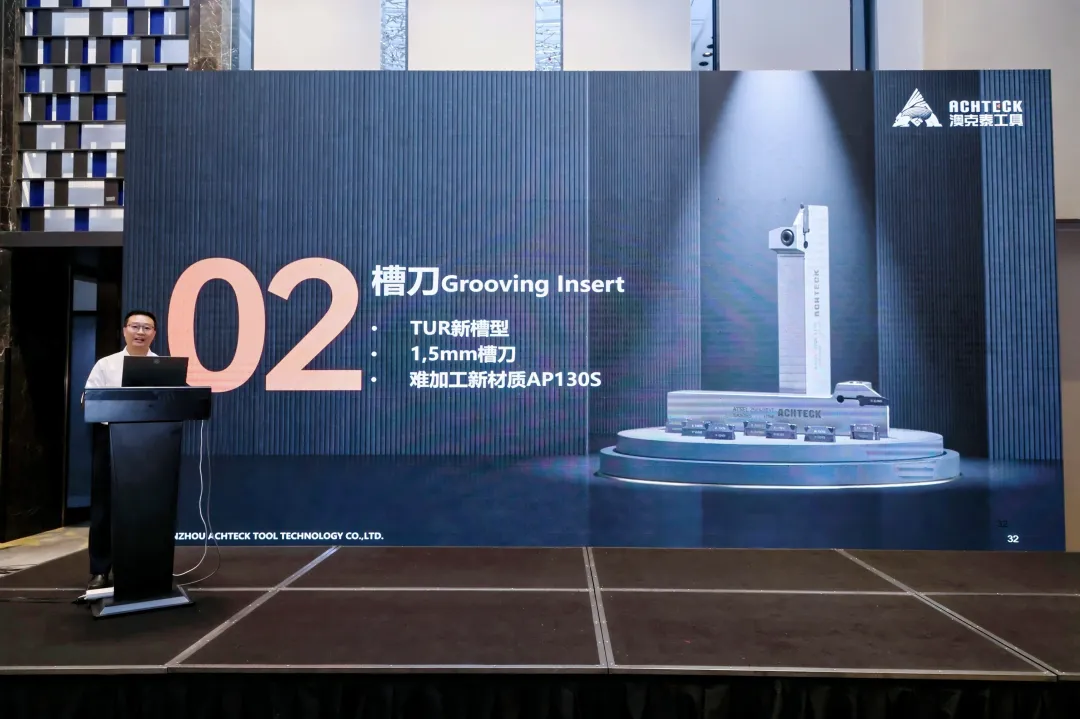
The successful conclusion of the Changchun stop brings Achteck Tools' new product promotional tour for this year to a fitting close. We wield technology as a blade, breaking through barrier after barrier in material machining; we stand with service as a shield, safeguarding every link in our customers' production chain. A curtain call is never an endpoint — it is the starting line of a new journey.
Going forward, Achteck Tools will continue to double down on R&D innovation, deepen our penetration into niche application scenarios, and forge long-term, win-win partnerships with our customers through uncompromising professional expertise and impeccable service. We look forward to gathering again next year, advancing together toward a new era of intelligent manufacturing!