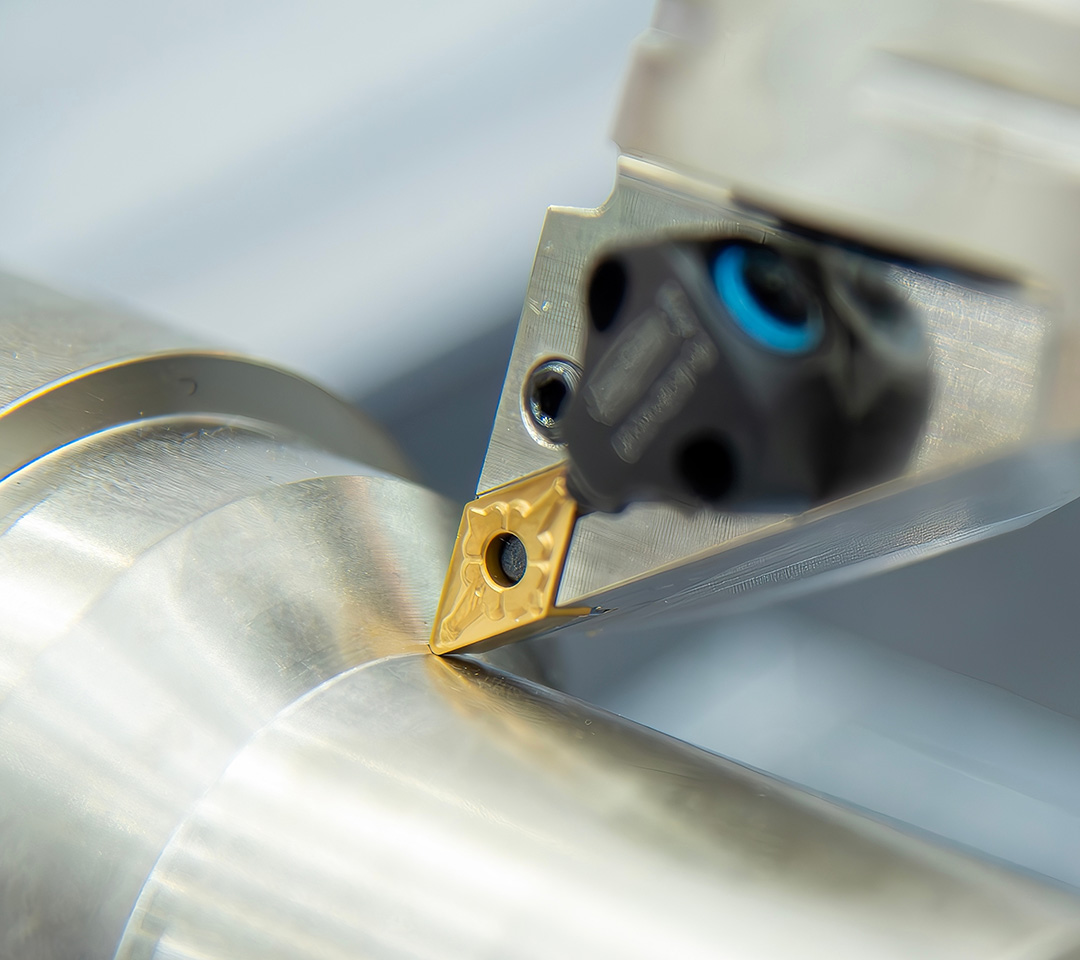

Why Are High-Temperature Alloys So "Tough to Machine"? – From Machining Challenges to Breakthrough Strategies – See How a Mature Product Provides the Solution
In the critical hot sections of aerospace and energy equipment, metal components must withstand high-temperature combustion gases of 600°C to 1000°C and cyclic high pressures. Ordinary steel rapidly oxidizes and undergoes creep failure under these conditions; only high-temperature alloys, with their exceptional oxidation resistance and sustained strength, support the reliable service life of the equipment. For this reason, they are regarded as the "strategic backbone" of high-end manufacturing, as their temperature tolerance and load-bearing capacity directly determine the safety margins of engines and gas turbines. However, high performance comes at a cost—high-temperature strength far exceeding that of conventional alloys, combined with a strong work-hardening tendency and low thermal conductivity, gives high-temperature alloys extreme cutting resistance and deformation resistance during machining, making them one of the most notoriously difficult challenges in manufacturing.

High-temperature alloys can be classified into three categories based on the matrix element: nickel-based, iron-based, and cobalt-based.
Nickel-based high-mperature alloys use nickel as the matrix, offer the highest service temperatures, and provide the best comprehensive mechanical properties, oxidation resistance, and corrosion resistance, but are extremely difficult to machine. Representative grades include GH4169 (Inconel 718), GH4033, Inconel 625, and others.
Iron-based high-temperature alloys use iron as the matrix, offer moderate service temperatures, and are characterized by poor thermal conductivity and severe work hardening. Representative grades include GH2036, GH2135, A-286, and others.
Cobalt-based high-temperature alloys use cobalt as the matrix, feature outstanding hot corrosion resistance and thermal fatigue resistance, and maintain good strength and toughness at high temperatures. Representative grades include GH5188, GH605, K640, and others.
By production process, high-temperature alloys are further divided into wrought high-temperature alloys and cast high-temperature alloys. Wrought high-temperature alloys have excellent high-temperature plasticity and can withstand pressure processing such as forging. Cast high-temperature alloys contain more strengthening elements such as W, Mo, Ti, and Al, and have higher carbon content; although they have high high-temperature strength, their plasticity is poor, making their machinability even worse than that of wrought high-temperature alloys.
High-temperature alloy machining difficulties and their impacts:
High high-temperature strength, heavy cutting loads, and high temperatures;
Significant work hardening and residual stress;
Severe flank wear at the tool tip, and tools are prone to chipping.
Customer impact: To avoid instantaneous tool chipping, cutting speed, feed rate, and depth of cut must be significantly reduced, resulting in a material removal rate far lower than when machining ordinary steel. The hardened layer generated on the machined surface forces subsequent passes to be even more conservative, multiplying the cycle time per part. At the same time, tool life is extremely short and prone to sudden chipping, while residual stress causes workpiece deformation or cracking, leading to scrapping of high-value workpieces. Both tool consumption and scrap losses drive up production costs.
Poor thermal conductivity (thermal conductivity ≈ 1/5 to 1/2 that of 45 steel), making it difficult for heat to be carried away by chips, with rapid temperature rise at the cutting edge;
Conventional coatings quickly soften and peel off, causing tool life to drop sharply.
Customer impact: Heat cannot be carried away by chips, with the vast majority concentrated at the tool tip, forcing strict limitations on cutting speed. This imposes stringent requirements on the tool's high-temperature resistance and the equipment's cooling capacity, causing tooling costs and operating costs to rise sharply.
Extremely prone to built-up edge (BUE), affecting surface quality.
Customer impact: The repeated adhesion and detachment of built-up edge causes unstable cutting, resulting in out-of-tolerance workpiece dimensions. The peeling of built-up edge can scratch the surface and create defects, leading to workpiece downgrading or scrap. If subsequent operations such as grinding or polishing are required, this adds further machining, material, and labor costs.
High content of strengthening elements, forming a large number of hard particles (carbides, intermetallic compounds);
Causing intense wear on the tool.
Customer impact: Hard particles cause extremely rapid and unstable tool wear, dramatically increasing tool change frequency and greatly reducing effective cutting time. The risk of chipping may also damage the workpiece, leading to increased machining and material costs.
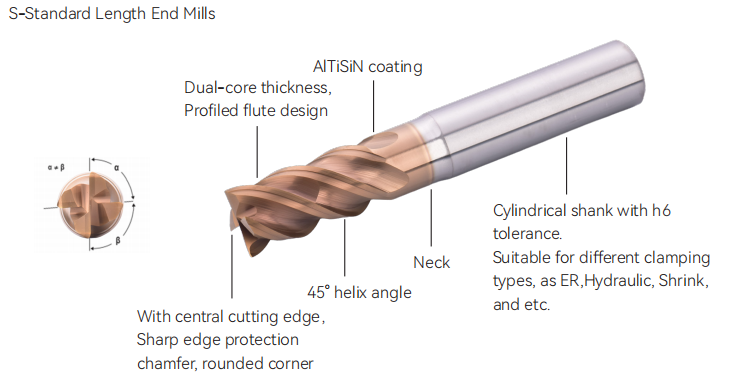
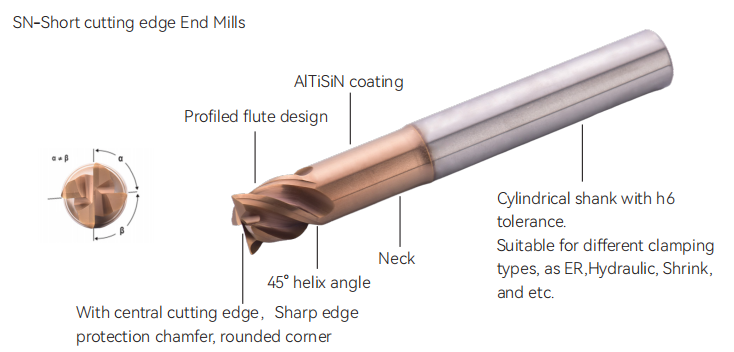
Achieving Cutting Tools' M160 Pro series is specifically designed for high-temperature alloy machining pain points, with tool characteristics deeply matched to cutting conditions, fundamentally improving machining stability and efficiency.
Severe work hardening and high content of strengthening elements
Double-core thick structure: Good tool rigidity, high bending and shear strength, no deformation or fracture under high-load cutting, effectively resisting the impact of the hardened layer.
4-flute unequal indexing + corner protection chamfer/radius: Distributes cutting forces and reduces single-point loading; the radius and chamfer reinforce the tool tip, resisting wear from the hardened layer and significantly reducing the probability of chipping.
Fine-grain tungsten carbide: Provides excellent chipping resistance while ensuring tool wear resistance.
Poor thermal conductivity, concentrated cutting heat, and high tendency for adhesion to the tool
Specialized AlTiSiN coating: Excellent high-temperature oxidation resistance, maintaining high hardness, high wear resistance, and good anti-adhesion properties under continuous cutting of high-temperature alloys.
45° helix angle design: Lighter and smoother cutting, reducing cutting heat generation; combined with the shaped flutes for rapid chip evacuation, carrying away a large amount of heat to protect both tool and workpiece.
Cutting edge treatment: Sharp edge combined with edge honing reduces built-up edge formation while increasing edge strength, dispersing stress, and preventing premature coating peeling.
Prone to vibration and poor surface quality
4-flute unequal indexing arrangement: Disrupts resonance cycles, suppresses high-frequency vibration, and significantly improves machined surface finish.
45° helix angle + standard/short edge dual specifications: SN short edge reinforces rigidity, suitable for rough and finishing operations; S standard long edge balances reach and stability, achieving stable high surface finish in both shoulder milling and slot milling.
Poor compatibility across multiple scenarios
Full series coverage: 4CS/4CSN corner chamfer, 4RS/4RSN corner radius, diameters 5–20mm, meeting the process requirements of shoulder milling, slot milling, cavity milling, circular interpolation milling, and dynamic milling.
Customization: Supports Weldon shank, internal cooling, internal cooling + Weldon shank, and other forms, adapting to high-end machine tools and high-speed, high-efficiency machining requirements.
Customer Benefits
The tool offers strong chipping resistance and stable tool life, with significantly reduced chipping and tool change frequency, increased effective cutting time, and controlled tool consumption and workpiece scrap costs. The specialized coating provides outstanding heat resistance, effectively extending tool life under thermal loads; reduced built-up edge lowers surface defects, greatly reducing or even eliminating rework operations, while smooth chip evacuation improves equipment utilization. Stable cutting significantly enhances surface finish, reducing or eliminating subsequent operations such as polishing and grinding, shortening cycle times, and lowering the risk of workpiece downgrade and scrap. A single series covers multiple operations, reducing selection and changeover time; custom design facilitates solution optimization, further reducing per-part cost and cycle time.
GH4169 (Inconel 718), as a typical nickel-based high-temperature alloy, is widely used in aerospace, energy equipment, and other fields due to its excellent high-temperature strength and fatigue resistance. Its severe work hardening, poor thermal conductivity, and high cutting forces make it a recognized difficult-to-machine material. In the following case study, we used the M160 series dedicated tools for validation. Detailed test data and performance comparisons are provided below:
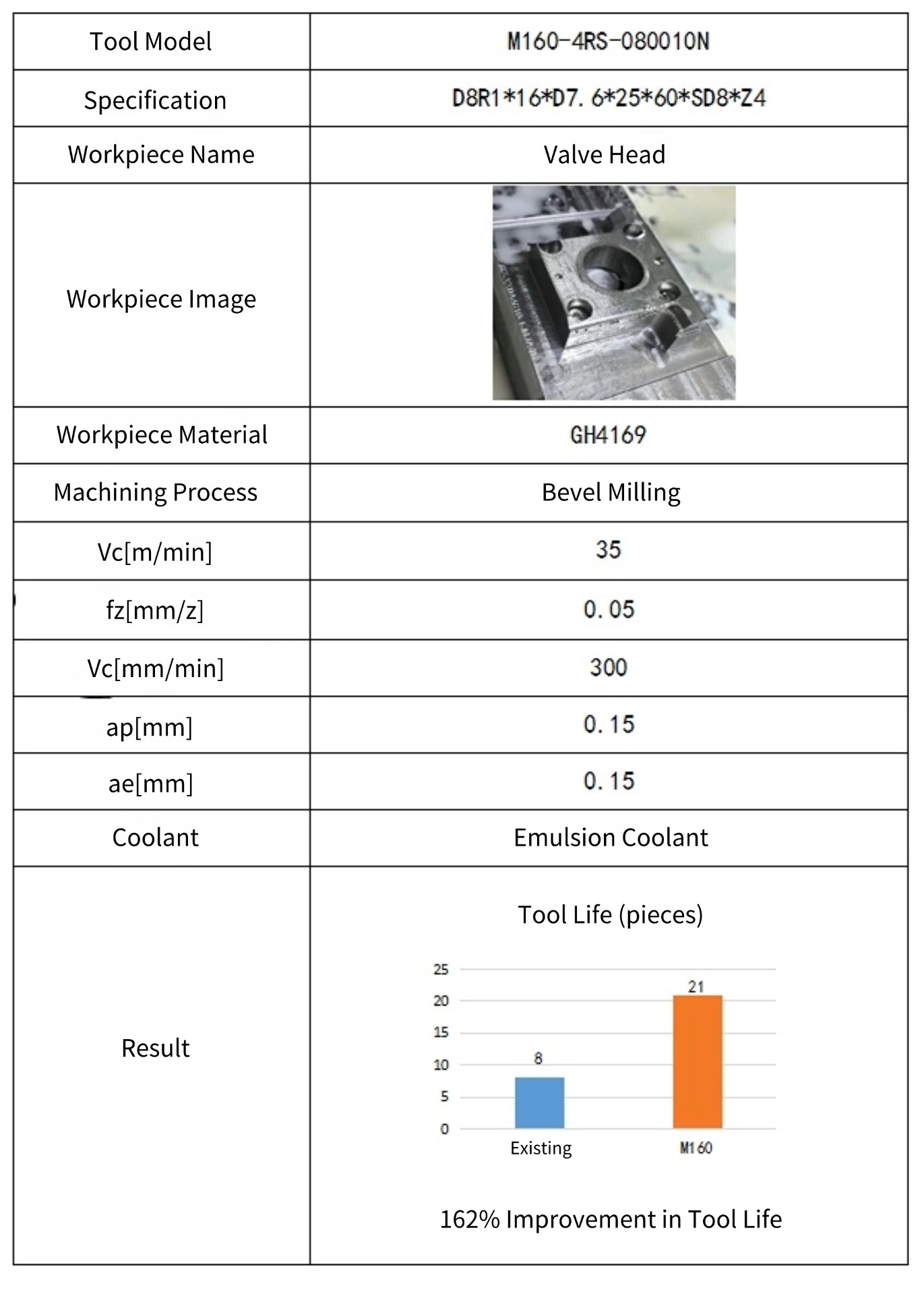
The Achieving M160 Pro series, with its comprehensive and precise product characteristics, systematically overcomes industry pain points in high-temperature alloy machining, including severe work hardening, poor heat dissipation, and vibration susceptibility. It achieves efficient and stable cutting processes at the source, significantly improving machining efficiency and surface quality while effectively extending tool life, providing solid and reliable product support for the machining of critical components in aerospace, energy equipment, and other fields.