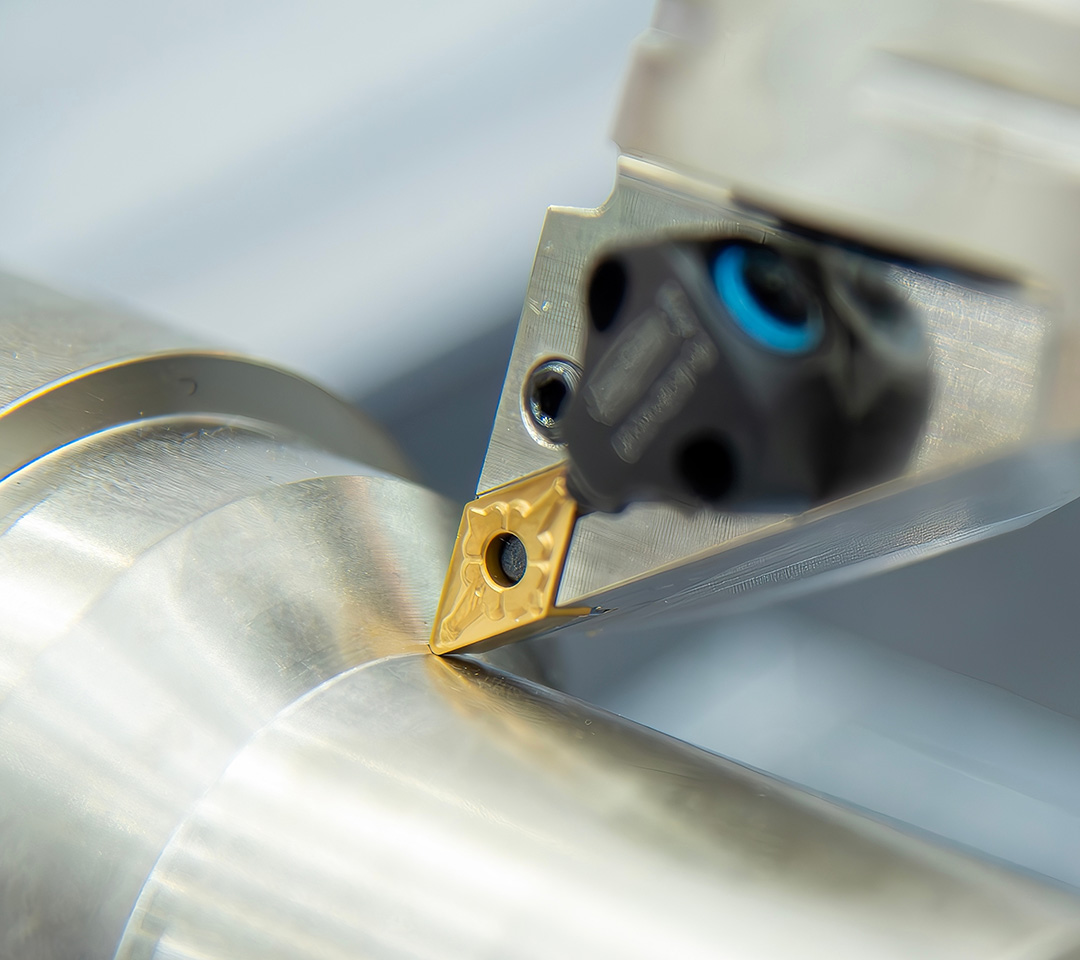

Milling Strategies & Tool Matching Guide: Master Tool Selection in One Article
In milling operations, a machining strategy refers to a systematic process plan that combines cutting methods, cutting parameters (cutting speed, feed rate, depth of cut, width of cut), tool paths, and process sequences based on machining objectives, workpiece materials, machine tool performance, tool conditions, and production requirements. It directly determines machining efficiency, tool life, workpiece accuracy, and surface quality. This article analyzes the definition of machining strategies in tool milling combined with cutting-edge industry technologies.
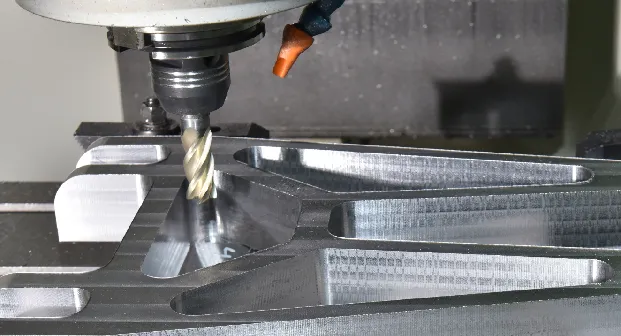
General Machining Strategy
A basic milling strategy for conventional working conditions without special performance requirements, where the width of cut (ae) and depth of cut (ap) are flexibly adjusted according to the machining type.
Tool Characteristics: Longer cutting edges, smaller core thickness, and less stringent requirements for dimensional accuracy.
Machine Tool Requirements: Standard CNC machines, no special requirements for high speed or high rigidity.
Application Areas: Small-batch production, multi-material machining, conventional roughing and finishing. Not suitable for high-difficulty advanced processes. Medium metal removal rate (MRR).
Achteck Solution:
Achteck M200 ECO Series solid carbide end mills are suitable for general machining applications.
Product Features: Adopts a new substrate material and AlCrN coating to effectively improve tool wear resistance. The cutting edge length is optimized for conventional machining, and the core thickness design balances rigidity and versatility, meeting basic cutting requirements for multiple materials.
Specifications: Available in metric and imperial sizes. Metric cutting diameters: Ø1–20 mm; imperial cutting diameters: Ø0.125–1 inch. 2/3/4/6 flute options. Tool types include flat end, ball nose, corner radius, chamfered edge, and fine pitch. Suitable for general operations such as face milling, shoulder milling, slot milling, and profile milling.
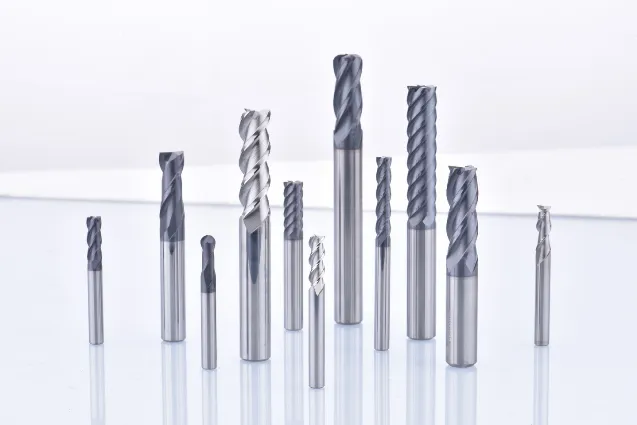
High-Speed Machining (HSM) Strategy
A precision and high-efficiency machining strategy centered on small radial width of cut, high cutting speed, and high feed rate. Features low cutting forces, minimal heat transfer, and reduced burrs, enabling high dimensional accuracy and low surface roughness Ra with a relatively high metal removal rate.
Tool Characteristics: Large core thickness, short cutting length, high rigidity, optimized flute geometry, and stable coating.
Machine Tool Requirements: High spindle speed, high feed rate, and advanced high-speed CNC systems.
Application Areas: Semi-finishing and finishing of 48–62 HRC hardened steel in the mold industry, short lead-time parts, and can be extended to other materials.
Achteck Solution:
Achteck M170 PRO Series high-hardness steel end mills are suitable for high-speed machining applications.
Product Features:Nano-grain tungsten carbide blanks combined with a new high-hardness coating provide excellent wear resistance and high-temperature stability. Large core thickness and high-rigidity design optimize tool structural strength. Chipping-resistant cutting edge design effectively reduces edge chipping during machining.
Specifications: Metric sizes only. Cutting diameters: Ø1–16 mm. 2/4/6 flute options. Tool types include flat end, ball nose, corner radius, and fine pitch. Suitable for ISO workpiece material groups P and H, and materials with hardness 45–60 HRC.
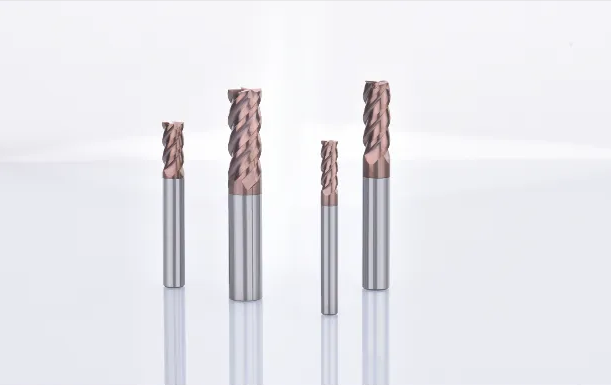
High-Performance Machining (HPM) Strategy
A machining strategy aimed at maximizing metal removal rate. Characterized by a width of cut (ae) equal to 1× tool diameter (DC) and a depth of cut (ap) of 1–1.5× DC, depending on the workpiece material. The chip load is much higher than conventional machining, pursuing efficient material removal.
Tool Characteristics: Specialized chip flute geometry, protective chamfer/radius on the cutting tip, smooth chip evacuation space, high-performance coating, and optional weldon shank clamping structure.
Machine Tool Requirements: High power, high rigidity, and high-stability clamping systems.
Application Areas: High-volume high-efficiency production, or single-piece machining requiring high metal removal rates.
Achteck Solution:
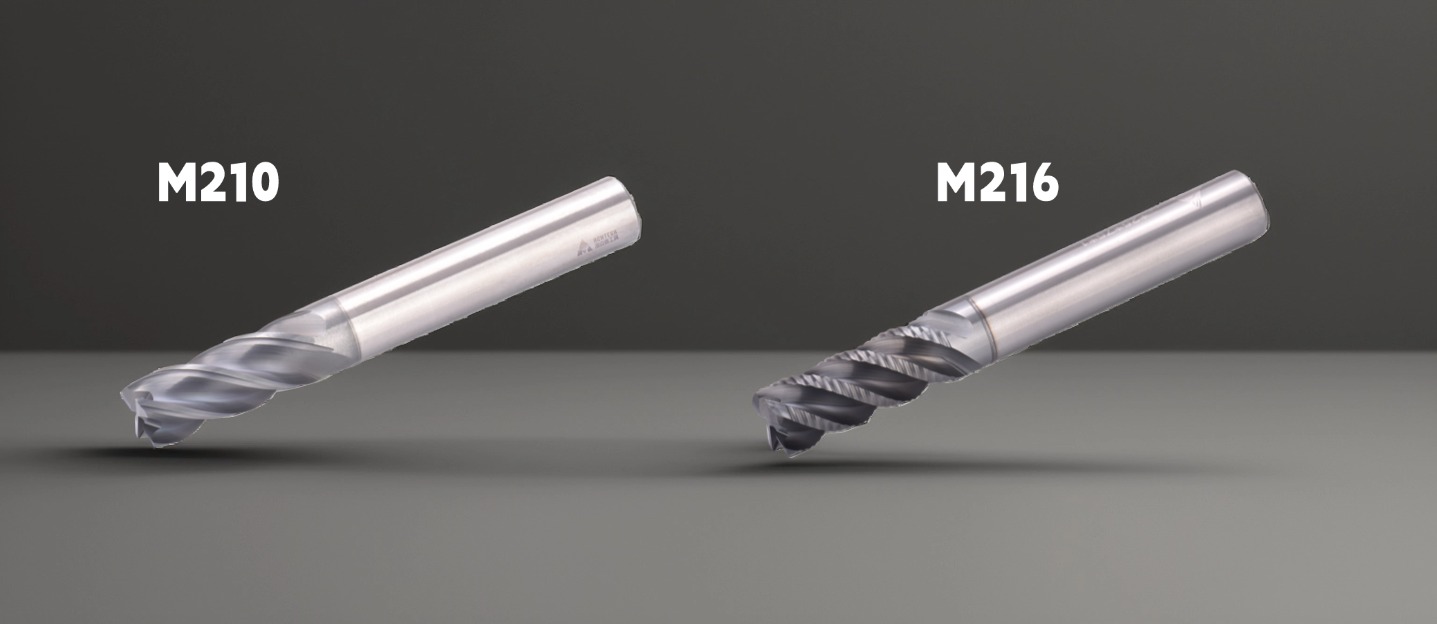
Achteck M210 and M216 PRO Series high-efficiency general-purpose end mills are suitable for high-performance machining applications.
Product Features: The M210 is designed for machining carbon steel, tool steel, and alloy steel. It adopts variable pitch and variable helix design for excellent vibration damping, formed flutes for superior chip evacuation, and chamfered cutting edges to improve chipping resistance, enabling high-efficiency machining. Maximum machining hardness: HRC50. The M216 is suitable for roughing steel and stainless steel. It features a fine wave chip breaker design to reduce cutting forces while increasing metal removal rate.
Specifications: Metric sizes only. M210 cutting diameters: Ø3–20 mm; M216 cutting diameters: Ø6–20 mm. 4/5/6 flute options. Tool types include chamfered edge, corner radius, and roughing end mill. Suitable for heavy-duty roughing of steel and stainless steel.
High-Feed Machining (HFM) Strategy
A high-feed machining strategy combining full-width cutting across the entire tool diameter with a small depth of cut. Compared to general machining, higher feed rates in HFM achieve a higher metal removal rate and good surface roughness.
Tool Characteristics: Specially developed cutting tips, extremely short cutting length, and dedicated coating.
Machine Tool Requirements: High stability and high feed rate.
Application Areas: Suitable for materials ranging from mild steel to hardened steel, titanium alloys, and stainless steel. It is ideal as pre-machining before high-speed machining and can also be used for deep cavity machining.
One of the advantages of this technology is that it enables simple, safe, and fast programming in CAM software. Using the contour milling strategy, complex shapes can be programmed relatively easily even without extensive programming experience.
Achteck Solution:
Achteck currently does not offer standard solid carbide end mill products for high-feed machining strategies. However, leveraging our customized non-standard technical capabilities, we can provide you with exclusive tool solutions tailored to high-feed working conditions. Please contact your nearest regional sales representative for inquiries, and we will respond promptly and deliver precise solutions.
Relying on in-depth insights into machine tool performance, workpiece materials, and machining parameters, Achteck precisely matches machining strategies with tool products to provide one-stop high-efficiency machining solutions. While ensuring stable machining quality, we help improve machining efficiency and optimize tooling costs.